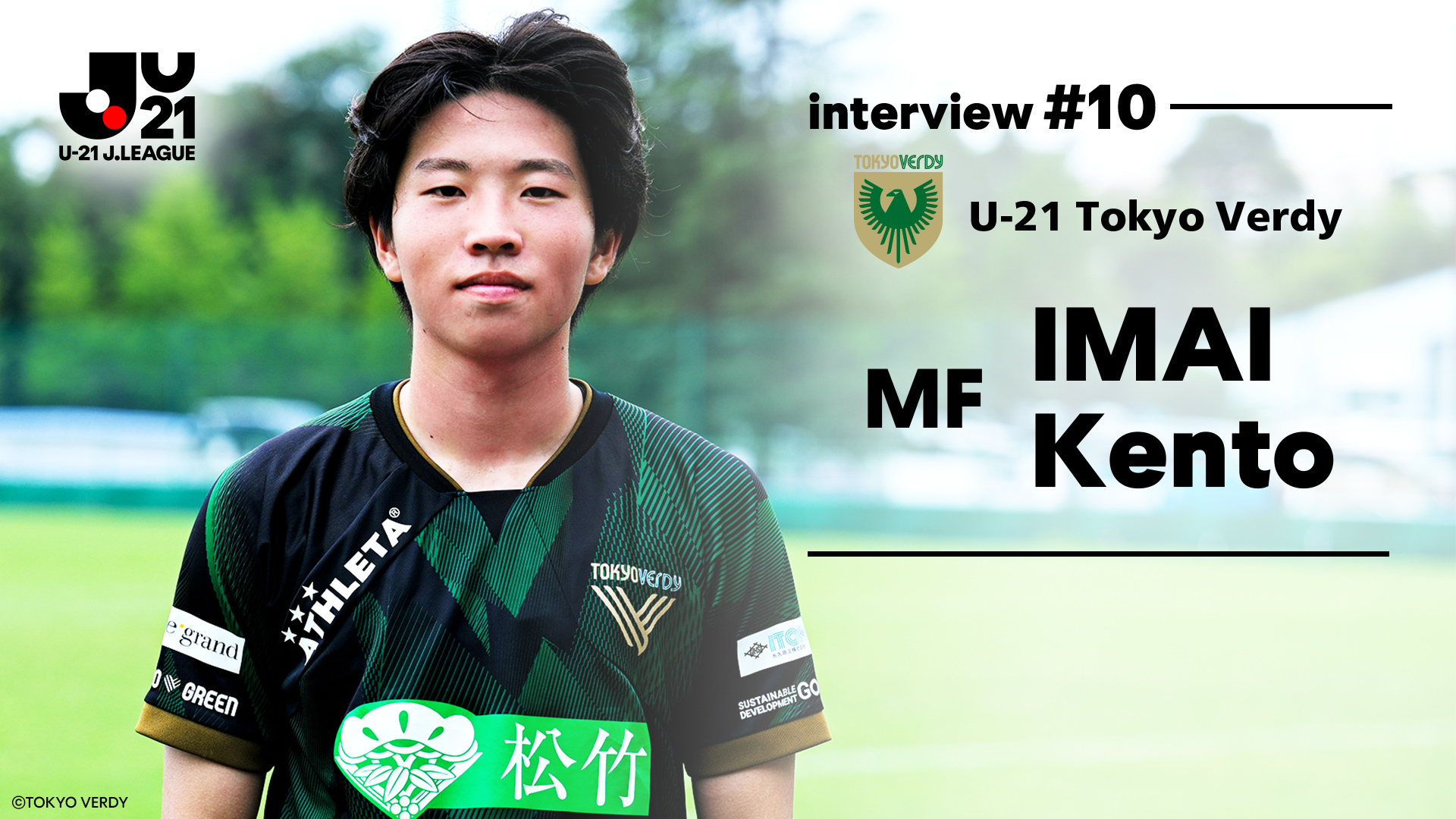
The U-21 J.League kicks off on 22 August. Newly established to accelerate the development of Japanese football and give young players a stage on which to challenge themselves, the league will bring together talent with the potential to represent Japan at senior level in the years ahead. In Poised to Pounce, we take a closer look at the careers and personalities of the next generation of players expected to make their mark. Part Ten traces how Tokyo Verdy midfielder Kento Imai, a player who has lived and breathed football from an early age, made his way to the professional game.
■ Moved by the supporters on his first appearance in the matchday squad
The scene and the roar of the supporters that day remain vivid in his memory.
On 16 May this year, Tokyo Verdy travelled to K’s denki Stadium Mito for Matchweek 17 of the MEIJI YASUDA J1 100 YEAR VISION LEAGUE Regional League Round. For the first time since turning professional, Kento Imai was named in the squad for an official match.
Having worn green since his academy days, Imai was already familiar with the Verdy supporters. But warming up on the touchline at a J1 match with their chants ringing around the stadium, while urging his team-mates on from pitch level, was an entirely new experience.
“I wasn’t nervous. I was ready to go on whenever I was needed.”
Imai kept himself ready, but the call never came. The 18-year-old was frustrated to miss out on his professional debut. Even so, after Verdy had battled to victory, the reception from the travelling supporters behind the goal left a lasting impression.
“Even though it was an away match, so many fans and supporters came. When we went over to them after the game and heard their chants up close, I got goosebumps. I remember thinking, ‘Next time, I want to work hard so I can hear my own chant.’”
It was a scene he had seen many times during his academy years. Yet experiencing the passion of the supporters and the sound of their chants from pitch level gave him a rush unlike anything he had felt before.
The experience only strengthened his desire to play in an official match.
“Honestly, I don’t think I’m even at the point where the manager and staff see me as someone they need yet. Getting there is the first hurdle I have to clear. Then I want to show what I can do and offer something different from Koki Morita and Rei Hirakawa”
■ Why a boy from a baseball family chose football
The experience in Mito gave Imai another glimpse of the future he wants, while the frustration of remaining on the bench provided fresh motivation. So where did the determination that drives him come from? Its roots lie in his childhood and the lessons he learnt from his family.
Imai grew up in Kawasaki, Kanagawa Prefecture, in what he describes as “a baseball family”. He had initially planned to play baseball himself, but there was a very simple reason why he ended up choosing football instead.
“The kindergarten I went to didn’t have a baseball team. They only had football, and my friends were like, ‘Shall we give it a try?’ So that’s how I started playing.”
Although it was his friends who first got him kicking a ball, his family’s passion for sport would shape the way he approached it.
His father had played baseball for many years, while his grandfather had worked behind the scenes in professional baseball as a member of staff with the former Nippon-Ham Fighters. Having seen professional athletes at close quarters, his grandfather was strict with Imai from an early age about both his attitude towards sport and how he conducted himself as a person.
Imai still remembers what his grandfather told him when he first started playing football.
“If you’re going to do it, aim to play for Japan and give it everything you’ve got.”
Coming from someone who knew the professional sporting world, those words carried real weight. They impressed on the young Imai that if he was going to take sport seriously, he had to commit himself fully.
■ Knocking on Verdy’s door — a formative encounter with Yusuke Mori
Hooked on football, Imai joined local side Nakanoshima FC when he started primary school. By his later primary-school years, his talent was beginning to blossom.
He continued to develop while attending a number of J.League club programmes, including Tokyo Verdy’s Premier Class, Kawasaki Frontale’s Elite Class and Yokohama F. Marinos’ Special Class.
A major decision came as he prepared to enter junior high school. While Imai was considering his options, Tokyo Verdy were the first club to approach him.
At the time, he already had a clear ambition to join a J.League academy. Yuzuki Sakamaki, a player one year above him who would later also become his senior in the Verdy academy, told him, “I think Verdy’s football would suit you.” That advice helped convince Imai to join Tokyo Verdy.
With a leading academy close to home, Imai took his first step towards the goal he had set himself with his grandfather.
He had mainly played as an attacking or defensive midfielder in primary school, but an encounter with Yusuke Mori in his first year of junior high school broadened his game. Mori, then a junior-youth coach and now Kawasaki Frontale U-18 manager, was coaching the age group above Imai at the time.
“Coach Mori said to me, ‘Why don’t you try playing at full-back?’ So, I played there for a while. In a back four he gave me a lot of freedom, which I really enjoyed. He taught me things like how to move inside when we had the ball.”
It took Imai time to get used to playing out wide, but he worked hard to adapt to the new position. He also studied Joshua Kimmich, who at the time was playing both at full-back and in defensive midfield for Germany.
■ Academy days spent pushing each other to improve
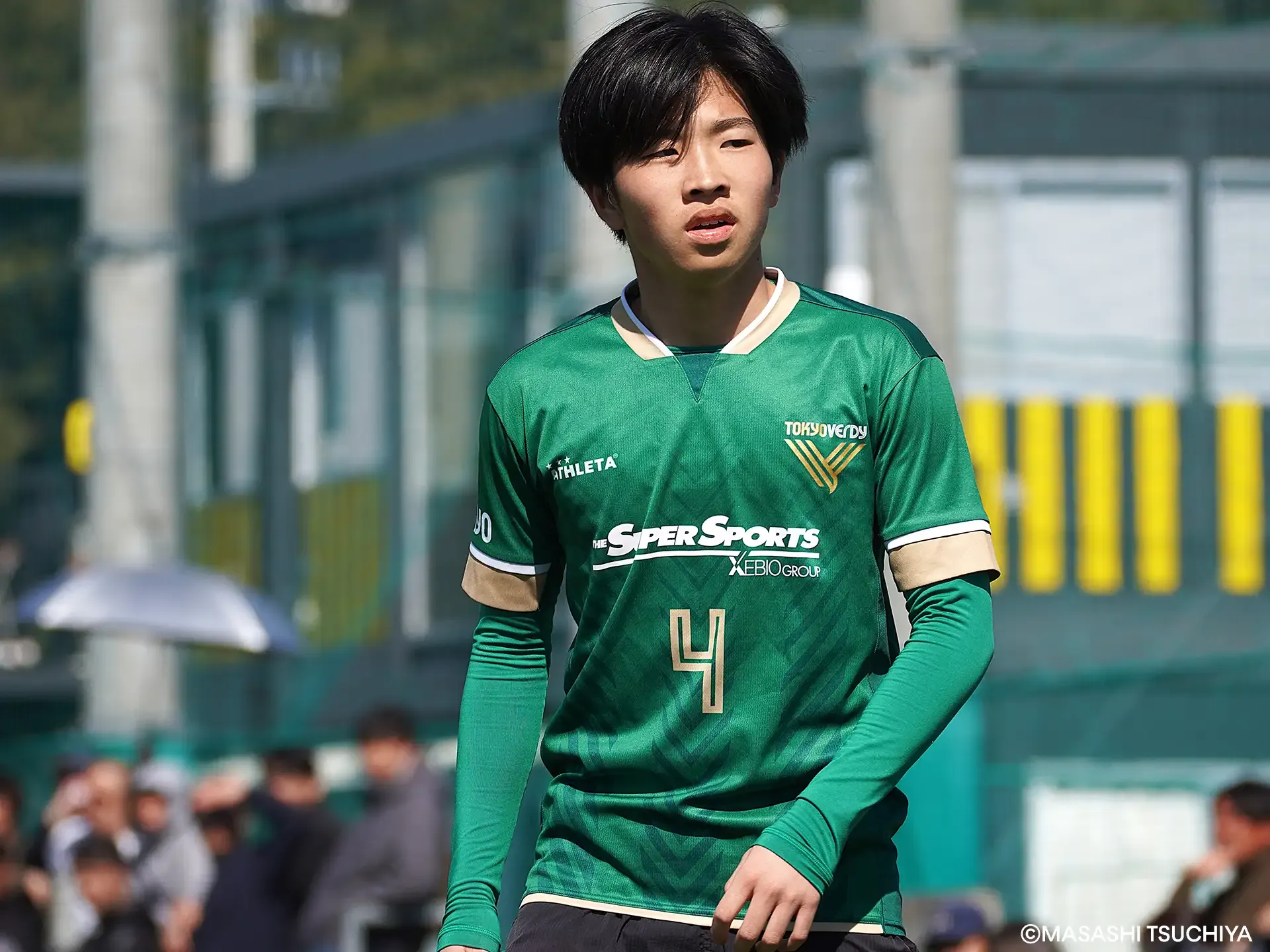
When he first joined Verdy’s junior-youth set-up, Imai admits he lacked confidence in his technique.
“I wasn’t very good on the ball.”
But Verdy’s emphasis on technical ability, combined with the experience of playing at full-back and regularly receiving the ball under pressure, helped him make major strides in areas that had previously been weaknesses, particularly playing his way out of tight situations and building attacks from the back.
The foundations of the box-to-box game he plays today — covering ground all over the pitch and contributing both in and out of possession — were laid during this period.
When Imai was in his second year of junior high school, Mototaka Ogasawara became junior-youth manager. Ogasawara, who later served on the men’s first-team coaching staff and is now head coach of Nippon TV Tokyo Verdy Beleza, switched the team to a back three, allowing Imai to return to attacking midfield. In a system that gave him plenty of freedom, his attacking instincts came to the fore.
Those coaches also had a major influence on him beyond the technical side of the game.
“Coach Mori taught me to enjoy football, but he also taught me that enjoying it doesn’t mean you stop caring about winning. Coach Ogasawara taught me about tactics and defending, of course, but he was also strict about how you carry yourself as a person, not just as a footballer.”
Tokyo Verdy’s academy brings together some of the country’s most promising young players, and Imai’s age group was packed with strong personalities. One of them was Shion Nakayama, who had regularly played up an age group since junior high school and remains a close rival despite playing in a different position.
“What defined our group wasn’t so much technical ability as how much we hated losing. We had lots of different personalities, but everyone was really competitive.”
They enjoyed expressing themselves with the ball, but were just as committed to the hard work and small details that can decide matches. Surrounded by that level of competition and intensity, Imai built the foundations of the player he is today.
■ A first-team reality check — discovering another side to Koki Morita
Imai continued to make steady progress through the academy, but stepping into the first-team environment showed him just how high the professional standard was.
From his first year of high school, he was given opportunities to join first-team training and practice matches. For the 16-year-old, those first experiences brought one surprise after another.
“I remember being really nervous the first time I trained with them.”
The intensity and speed were unlike anything he had experienced at youth level, as was the tension on the training pitch. More than anything, he was struck by the professionalism of the senior players.
“The way players like Koki Morita and Hiroto Taniguchi communicated was completely different from what I was used to in the youth team. In the academy, there were hardly any players who were that demanding of their team-mates. But with the first team, Hiroto would make demands and give instructions to everyone, regardless of age. That really made me think, ‘So this is what being a professional is like.’”
Morita, a senior graduate of the Verdy academy who now wears the No. 10 shirt and captains the team, made an especially strong impression. Facing him directly on the pitch revealed another side to his game.
“Koki’s ability on the ball is obviously on another level, but when I actually came up against him, I realised how good he is defensively too. At the time, I thought of him as more of an attacking player, so his defending really surprised me. Now he wears No. 10 and has the responsibility of being captain as well. I just look at him and think, ‘He’s incredible.’”
Experiencing professional standards first-hand also changed the way Imai approached his own football.
“When I was in the academy, I didn’t think about the game that deeply. I probably relied on instinct quite a lot, and there were times when I was a bit casual about things.”
Training alongside players such as Morita raised his own standards. He now pays far greater attention to how he approaches training and to every individual play.
■ Competing for a place in midfield — Hitoshi Morishita’s advice
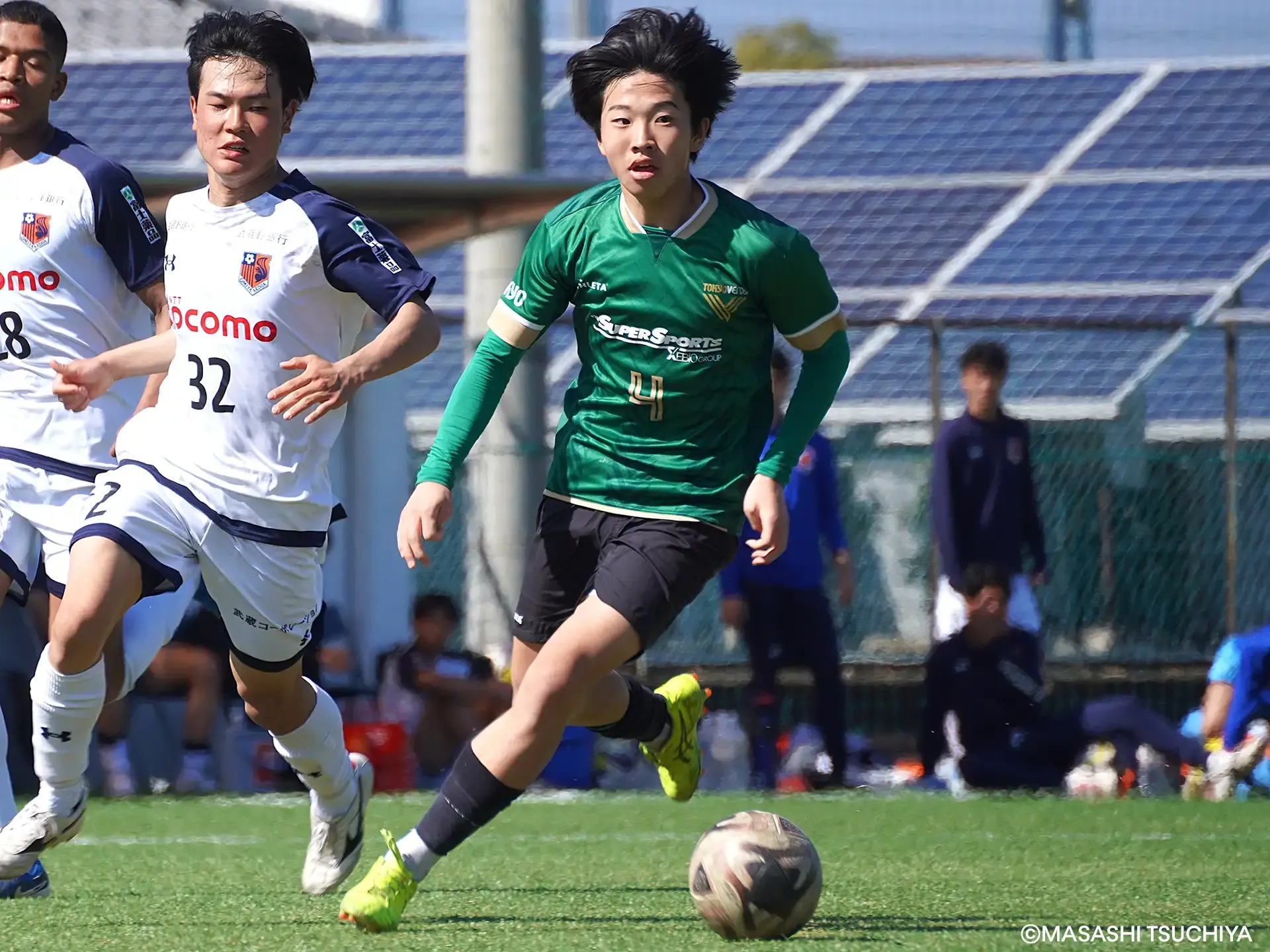
Imai is now competing directly for playing time with Morita and the other midfielders he once looked up to. To earn his place and establish himself as a professional, he listens carefully to the guidance he receives each day.
One message in particular is regularly repeated by head coach Hitoshi Morishita when Imai plays in defensive midfield.
“Don’t look to someone else to tell you if you’re right. Work out the answer for yourself.”
Imai explains what those words mean to him.
“Of course, we have team rules about things like positioning in the build-up. But ultimately, if you manage to move the ball forward, then the choice you made was the right one. To do that, I need to improve my football IQ, make decisions without hesitating and take the initiative myself.”
His aim is to become a midfielder who can make his own decisions, take the initiative and drive the game forward. Even training matches are an opportunity to work on “how I can receive the ball and move us forward”.
Imai is fully aware of how difficult it will be to earn the team’s trust and reach the J1 pitch. Competition in midfield is fierce, with players such as Morita, Hirakawa, Kosuke Saito and Joi Yamamoto all vying for places. But the time for simply admiring them is over.
“I really enjoy training with Koki and the others, but if I want to play, I have to take the place of players like Koki and Rei. First of all, I need to work hard enough to get myself onto the same level as them.”
He says it without any sign of being overawed. The competitive streak is there, even if it burns quietly, and Imai is determined to earn a place of his own.
■ ‘I want to focus on what I need to work on right now’
As Imai continues to work towards his first-team debut and a regular place, the U-21 J.League has been established this season to give 19- to 21-year-olds more opportunities to play competitive matches.
For Imai, who had gone six months without playing an official match since graduating from the academy, the arrival of the new league was welcome news.
“I haven’t played an official match for six months, so I’m honestly just looking forward to playing. There are things you only learn by playing matches. You find out what you still need to improve, and you get the chance to show your strengths in a competitive game. I think the league will be really valuable for that.”
The U-21 J.League will also give him more opportunities to share the pitch with players from Tokyo Verdy Youth. Although he will now be one of the players expected to set an example for his younger team-mates, Imai has no intention of forcing himself into a leadership role. Instead, he wants to show what it means to be a professional through the way he plays.
“I’ve never really been the captain type who leads by talking. I’d rather show it with the way I play.”
Through the quality and intensity of his football and the way he carries himself on the pitch, he wants to show the standards expected of a professional.
The chance to play in front of spectators rather than behind closed doors in practice matches is another valuable part of the experience.
“Being a professional means people are watching you. I grew up watching professional players, and they inspired me to dream. Having people cheer you on is a great feeling, and being able to play in front of a crowd is a fantastic opportunity.”
Performing well in the U-21 J.League, however, is not the ultimate objective.
“My biggest goal is to play J1 matches for the first team. To get there, I want to focus on what I need to work on right now.”
Next year’s FIFA U-20 World Cup is another target. Having represented Japan at youth level, Imai has his sights on that tournament as well. Strong performances there could also take him closer to the senior national team — the dream he has carried with him since childhood.
“I haven’t been called up for the last few national-team camps, but I know people in the national-team set-up will be watching how I perform in the U-21 J.League. First, I want to do well for Verdy and earn opportunities in J1. If I can keep producing results there, I think that will put me in a position to be called up to the age-group national team again. So, for now, I want to work hard and play as many J.League matches as I can.”
On the day he first started playing football, his grandfather told him: “If you’re going to do it, aim to play for Japan and give it everything you’ve got.”
Years later, those words still point him towards the same destination. With pride in the green shirt, Imai will keep putting in the hard work as he pursues the goal he set himself all those years ago.
Interview and text by Ryo Shiratani